

- Jiulong Engineering Team
- 8th August 2026
How to Choose the Right Cooling Fan: Airflow, Static Pressure and Noise
Selecting a cooling fan is a balance between airflow, static pressure, noise and installation constraints. Choosing on a single parameter often leads to underperforming cooling or unnecessary cost. This guide explains the key factors our engineers consider when recommending a fan platform.
1. Start with the Thermal Load
Estimate the heat generated by the components that need cooling, and the maximum acceptable temperature inside the enclosure. This defines the required airflow (CFM or m³/h). As a first approximation, many engineers use: Airflow (CFM) ≈ 3 × Heat load (W) / Allowed temperature rise (°C). The real requirement depends on the enclosure’s airflow resistance.
2. Understand Airflow vs. Static Pressure
Fan datasheets show an airflow-static pressure curve. The operating point is where the fan curve meets the system impedance curve:
- Open, low-resistance systems: axial fans deliver high airflow efficiently.
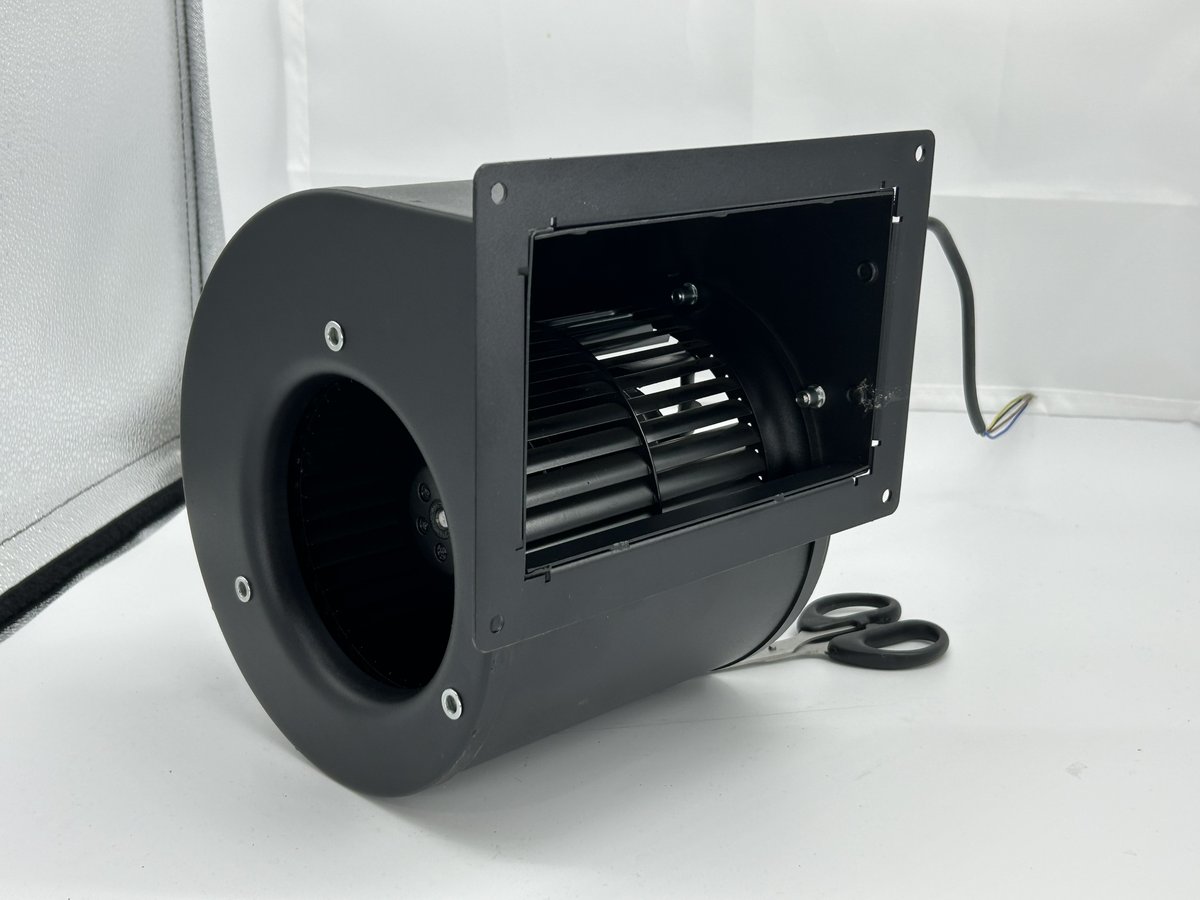
- Dense enclosures, radiators and filters: higher static pressure is needed; centrifugal fans often perform better.
- Long ducts or back-pressure conditions: consider fan series with steeper pressure curves.
3. Match Voltage and Control
Confirm the available supply (AC 115/230 V, DC 12/24/48 V, or EC platforms with wide-range input) and any control requirements such as PWM speed control, tachometer output or temperature-based speed regulation. EC fans combine AC input convenience with DC flexibility and high efficiency.
4. Set Noise and Life Targets
Noise requirements vary greatly between industrial equipment and medical or office environments. Fan speed is the dominant factor in both noise and bearing life – running a larger fan at lower speed often achieves the same airflow with less noise and longer life.
5. Check the Operating Environment
Temperature range, dust, humidity, oil mist and vibration all affect fan selection. For harsh environments consider all-metal construction, ball bearings, IP-rated designs or explosion-proof options where required.
Need help? Send us your airflow, pressure, voltage, dimensions and environment requirements – our engineers will recommend suitable AC, DC or EC fan platforms with datasheets and performance curves.

 Related


Excellent Service Each and Every Time